
There is a quiet expiration date ticking away on the history of your own mind.
In the UK, under standard data protection guidelines and the Information and Records Management Society (IRMS) framework, schools and local authorities are systematically required to securely shred or delete a pupil’s educational records—including Special Educational Needs (SEN) statements, speech therapy referrals, and psychological assessments – once they turn 25.
On paper, this policy is framed as a victory for data privacy and compliance under UK GDPR. But in reality, it creates a massive data black hole for millions of adults. Just as we enter the most critical stages of our careers, higher education, or personal health journeys, the foundational blueprints of how we learn are permanently erased.
A Personal Reality Check: The Data I Can Never Recover
This issue isn’t academic for me; it’s entirely personal.
When I was seven years old, I was assessed in school and diagnosed with dyslexia. Around the same time, I was referred to speech therapy to help me navigate early communication challenges. Those early interventions changed the trajectory of my life.
Now, I am nearly 40. As an adult navigating a fast-paced professional world, understanding my unique cognitive profile and tracing those early clinical and educational steps is more vital than ever. If I had been exposed to a different environment – perhaps more aloud speaking or rigorous reading at an even earlier age—maybe those traits would have manifested differently. No one can say for sure.
What I do know is that having access to those original diagnostic records today would be invaluable for my adult self-understanding. Instead, because of the standard age-25 purge, that data is completely gone. I have no access to it. It’s as if those pivotal chapters of my development were simply rewritten as blank pages.
The 20-Year Paradigm Shift: Changing Environments, Rising Diagnoses
We cannot look at data retention through an outdated lens anymore. Over the past two decades, we have witnessed a massive, unprecedented spike in children diagnosed with neurological and neurodevelopmental conditions.
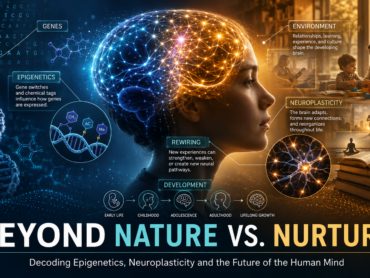
At the same time, the environment in which children grow up in has altered drastically. Modern science increasingly shows that the brain exists on a highly fluid spectrum. Whether it is dyslexia, ADHD, autism, or environmentally triggered conditions like PTSD, our surroundings, sensory inputs, and early childhood heavily dictate how these conditions manifest and enhance over time.
The Baseline Argument: If our minds are constantly being reshaped by our environments as we age, your childhood education and medical records serve as your lifetime baseline map.
By destroying these records at age 25, the system forces adults to jump through expensive, stressful hoops later in life:
-
Lost Diagnostic Context: When seeking a later-in-life assessment for ADD, ADHD, or trauma-related conditions, clinicians look for a timeline. If your childhood baseline was shredded on your 25th birthday, you lose the primary evidence needed to understand your adult brain.
-
Redundant Re-Assessments: Adults are frequently forced to pay thousands of pounds out-of-pocket for private diagnostic assessments because their childhood records no longer exist.
-
Barrier to Workplace Adjustments: Without historical proof of how you learn, securing Access to Work grants or reasonable employer adjustments becomes an uphill battle.
How EdiWay is Changing the Narrative (and Keeping You in Control)
We believe that your educational records belong to you, not a school server or a local council filing cabinet slated for destruction. You should have lifelong, unfettered access to the milestones that shaped how you think.
This exact frustration is why we built EdiWay.
While strict data privacy laws mean no platform can hold onto childhood data indefinitely without explicit adult consent, EdiWay is building a proactive bridge to long-term ownership. Instead of letting your records face an automated, silent purge, our system puts the control back into the hands of individuals before it’s too late:
-
The Age-24 Safeguard: When a user reaches age 24, EdiWay will issue an active notification alerting them that their childhood data threshold is approaching. This gives them a clear, unhurried window to take action.
-
The Adult Account Transition: We are designing a secure framework that allows a young person to verify their identity upon reaching adulthood. Once verified, they can independently claim and transition their childhood records into a permanent, self-managed adult account—preserving their unique baseline map for future health, educational, or professional needs.
-
Informed Choices: To stay compliant with privacy regulations, data that is completely abandoned may eventually have to be removed—but EdiWay ensures you are given the choice, the warning, and the digital tools to preserve your history first.
The environment will keep changing, and our brains will keep adapting. EdiWay ensures that the next generation of learners won’t look back at age 40 and find themselves locked out of their own history. Your learning journey doesn’t end at 25, and your data shouldn’t either.