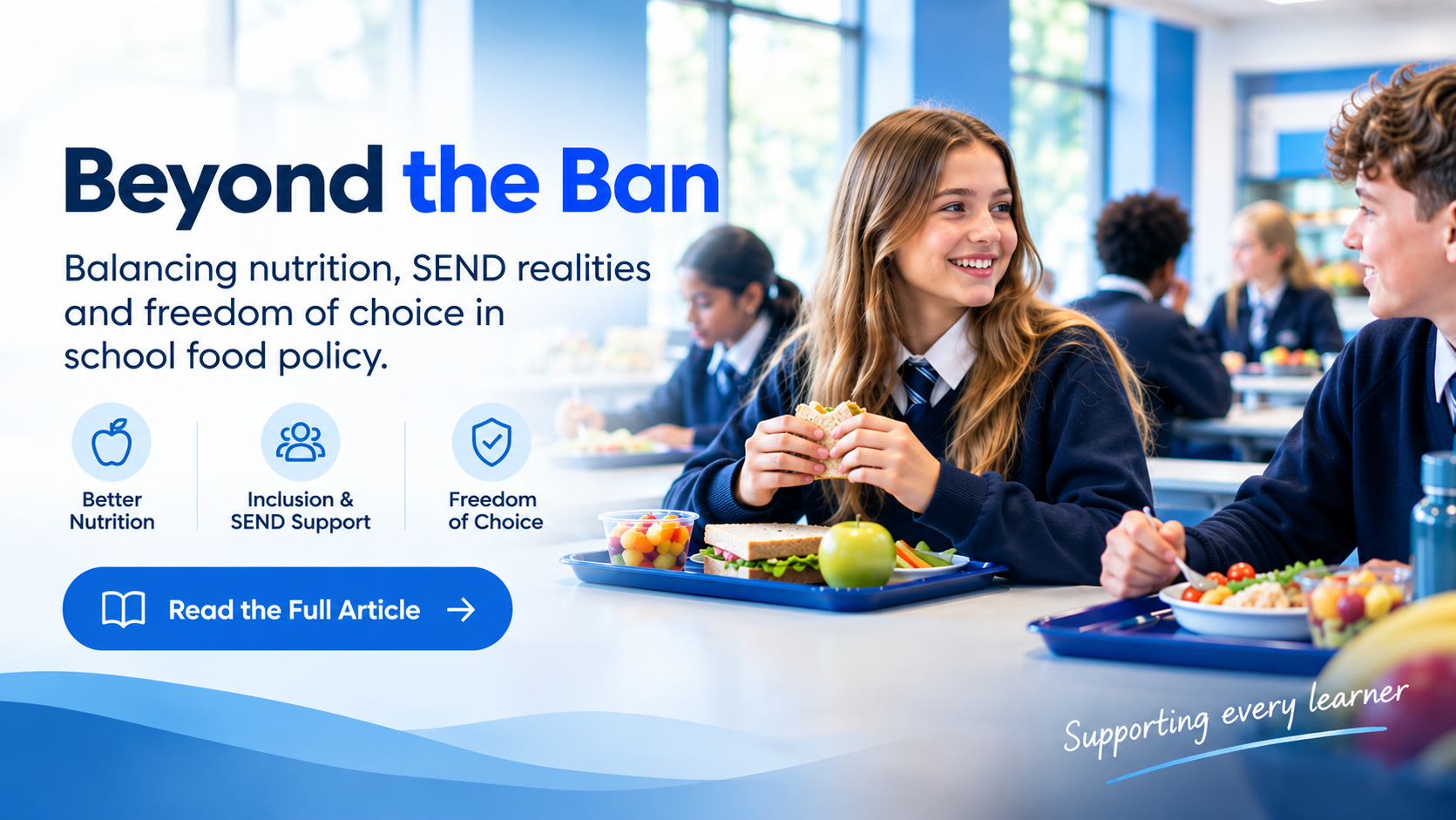
Does a total compliance framework genuinely protect our youth, or does it strip away the foundational flexibility required to support every individual learner?
Effective from September 2027 for primary schools (with a phased approach for secondary settings), the Department for Education’s (DfE) new guidelines systematically target deep-fried items, high-sugar breakfast options, and refined foods. Traditional fixtures like battered fish and chips, sausage rolls, fried eggs, and daily pizza options are out. In their place, schools are ordered to mandate elements like 50% wholewheat pasta, mandatory weekly pulses (such as chickpeas and lentils), and fresh fruit with every single dessert.
However, when uniform national mandates collide with the complex, diverse reality of everyday school life, a purely clinical approach to nutrition falls short. True advocacy for children requires looking beyond the macros to analyze how these rules impact special needs, cultural expression, and a child’s psychological relationship with food.
1. The Sensory Battleground: A Crisis for SEND Learners
For an estimated one in five children with Special Educational Needs and Disabilities (SEND) – particularly those on the autism spectrum, with ADHD, or experiencing Avoidant/Restrictive Food Intake Disorder (ARFID)- food is a volatile sensory environment rather than a mere lifestyle choice. Sensory processing differences mean that unpredictable food textures, smells, and visual presentations can trigger immediate cognitive distress and severe anxiety.
Within this context, highly standardized, uniform items – often generalized as processed or “beige” foods like plain pasta, standard chips, or familiar sausages – serve a critical psychological function as “safe foods”. They offer absolute predictability to a child whose world regularly feels overwhelming. A specific brand of chicken nugget or a precisely cut chip provides a reliable sensory profile that never changes.
When a rigid menu abruptly removes these items and introduces mandated pulses, high-fibre grains, or mixed salads, a neurodivergent child does not magically adapt. Instead, research and expert commentary from institutions like the Sheffield Institute of Education warn that the likely outcome is a student who stops eating at school entirely.
By removing safe options under a strict compliance model, schools risk replacing poor nutrition with a total absence of nutrition. A SEND child navigating a sensory-heavy school day on an empty stomach experiences compromised executive function, plummeting blood sugar, emotional dysregulation, and an increase in classroom behavioral challenges. A policy designed to promote physical health inadvertently compromises a vulnerable child’s mental well-being and ability to learn.
2. The Cultural Lens: Preventing Homogenization in the Dining Hall
A school community thrives when it mirrors the multicultural fabric of modern society. Food is one of the most visible expressions of heritage, family traditions, and cultural comfort.
When over-centralised government policies strictly limit certain cooking styles – such as the outright ban on deep-frying at any preparation stage – they run the risk of inadvertently homogenizing the lunch menu. Many authentic, traditional, and global dishes rely on varied culinary methods that do not neatly align with rigid, Western-centric dietetic standards.
For instance, certain traditional Caribbean, South Asian, or West African elements require specific flash-frying techniques or rely on certain processed staples to remain authentic. Under the strict new limits, school chefs may find it increasingly difficult to prepare these culturally significant meals while meeting tight national percentages.
To remain truly inclusive, nutrition policies must celebrate dietary diversity rather than force every school kitchen into an identical, clinical template. Homogenizing the school menu reduces a chef’s capacity to serve culturally familiar foods that make students from minority or marginalized backgrounds feel recognized, safe, and valued at the dinner table.
3. The Psychology of Choice: Learning Autonomy vs. Enforced Restriction
From a developmental perspective, the ultimate goal of education is to equip young people with the capacity to navigate an unregulated adult world. In the real world, high-fat, high-sugar, and ultra-processed foods are universally accessible. Outright environmental bans inside school walls miss a crucial pedagogical opportunity to teach learned self-regulation.
Psychological research continuously demonstrates the persistence of the “forbidden fruit” effect. When specific foods are completely demonized and withheld, their psychological allure spikes dramatically. If a child spends seven hours a day in an environment where a slice of pizza or a biscuit is treated as contraband, they fail to develop a balanced relationship with those foods.
Teenagers, in particular, are highly likely to disengage from school food entirely if they feel a complete lack of agency over their meals, pushing them to seek out unregulated snacks from local shops the moment they pass through the school gates. True health education does not stem from total restriction; it comes from structured autonomy, where children are given the freedom to make choices within a supportive environment, helping them construct their own internal boundaries for later life.
The Path Forward: “Guided Autonomy”
To build a school food system that is genuinely sustainable, equitable, and inclusive, we must move past binary thinking. The solution lies in a model of Guided Autonomy – establishing high-quality, nutrient-dense options as the default layout while retaining local, school-level flexibility to accommodate individual student needs.
- Formalized SEND Safe-Food Exemptions: Ensuring schools have explicit legal and regulatory clearance to grant documented food adjustments for children with complex sensory profiles, preventing headteachers from being penalized during official inspections.
- Student-Led Menu Co-Design: Involving student councils and diverse youth cohorts directly in the recipe-testing process to ensure the mandated wholegrains and pulses are palatable, minimizing massive food waste and protecting student buy-in.
- Positive Choice Architecture (Nudging): Utilizing product placement, attractive presentation, and creative menu styling to make healthier choices visually enticing and seamless to select, rather than relying on heavy-handed, punitive rules.
Nutrition is incredibly high-stakes, but a child’s mental well-being, cultural identity, and growing independence are equally vital. As the UK transitions toward these new rules, we must advocate for a system that nourishes the entire learner – body, mind, and identity alike.