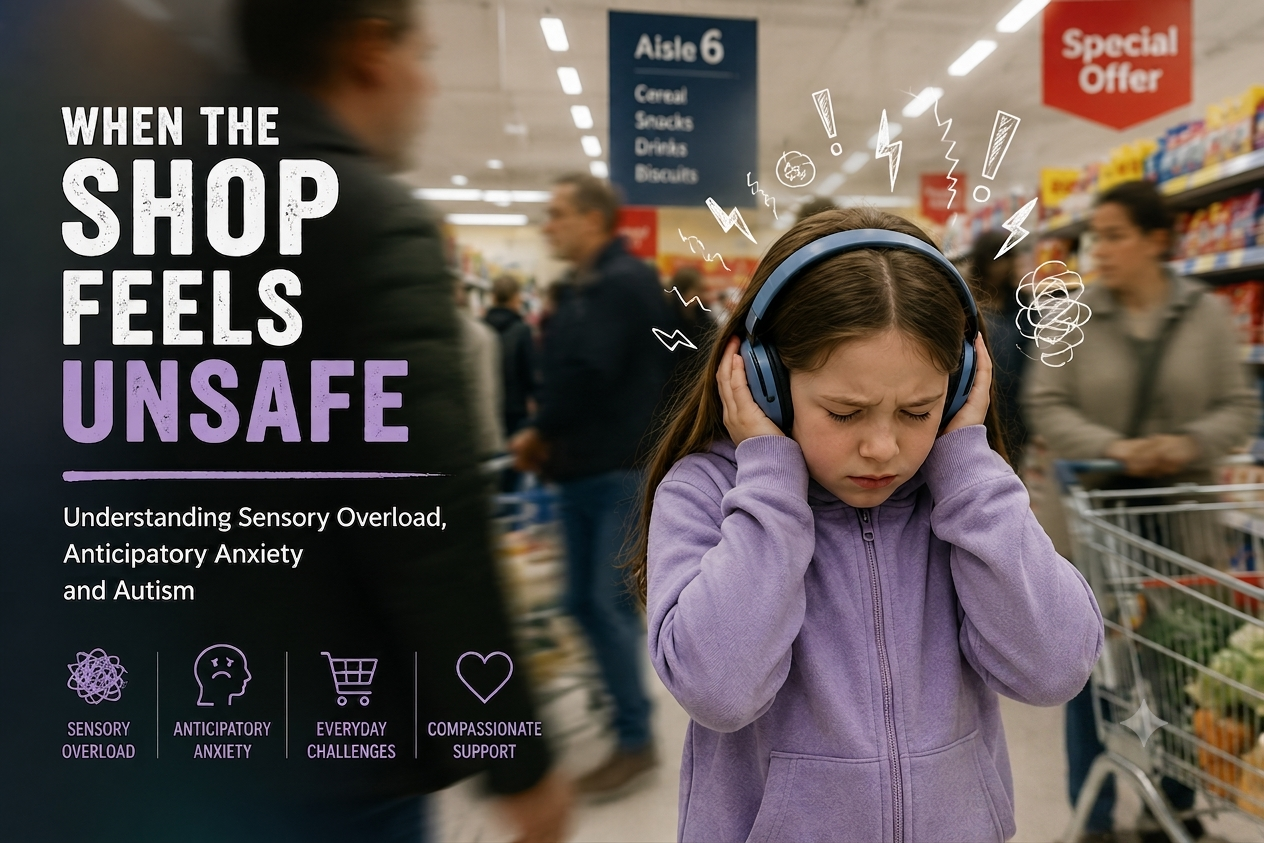
It is a scenario many parents of neurodivergent children know all too well. Day one: You walk into a shop, the fire alarm unexpectedly blares, and your child has an intense meltdown. Day two: You try again, but your child is already visibly anxious before entering. Fifteen minutes before closing, the overhead lights begin to dim or flicker as the shop prepares to shut down. Instantly, another meltdown happens.
If you have experienced this, please take a deep breath and know you are not alone, and you did nothing wrong.
To support a child through this, we have to look beneath the surface of the behaviour. Let’s explore what is actually happening in their brain, debunk a common myth, and look at practical ways to help them feel safe again.
Is This Part of Their Autism?
Yes. What you are seeing is a textbook example of how autism fundamentally changes the way a child processes the world around them. It comes down to two main factors:
- Sensory Hyper-Reactivity: Many autistic children experience sensory inputs—like the piercing ring of a fire alarm or the hum and visual shift of dimming retail lights—as physical pain or an immediate threat to their safety. Their nervous system goes straight into a “fight, flight, or freeze” response.
- A Need for Predictability: Neurodivergent brains rely heavily on routines and predictability to feel secure. A fire alarm is the ultimate disruption to predictability. When it went off on the first day, it didn’t just scare them; it classified that specific shop as a “dangerous zone” in their mind.
Is It a Lack of Social Interaction?
No. It is incredibly important to clarify this: it is not caused by a lack of socialisation, nor is it a behavioural tantrum.
A tantrum happens when a child wants something they can’t have and stops once they get it. A meltdown is an involuntary neurological overload. When the child went back to the shop on the second day, their brain was already flooded with cortisol (the stress hormone) due to anticipatory anxiety – they remembered the terror of the day before. When the lights dimmed, it was a sudden environmental change that their already-overloaded system simply could not handle. Socialising more will not fix a sensory processing overload.
The Path to Resolution: Rebuilding a Sense of Safety
Resolving this isn’t about forcing the child to “tough it out.” It’s about gently rewiring their association with the environment so their brain learns that shops can be safe again.
Here is a step-by-step approach to help your child navigate and overcome this specific anxiety:
1. Validate and Co-Regulate: Immediate Aftermath.
Before trying to go back to any shop, focus on calming their nervous system at home. Talk about what happened. Use simple language: “The alarm yesterday was so loud, and it scared your ears. It is okay that you felt scared.” Your calm presence helps soothe their elevated stress hormones.
2. Equip Them with Sensory Tools: Preparation Phase.
Before your next outing, introduce tools that give the child control over their sensory environment. High-quality ear defenders (noise-cancelling headphones) are essential for muting unexpected alarms. Giving them a pair of sunglasses can also soften the harshness of retail fluorescent lighting.
- Use a Visual ‘Social Story’: Before Leaving the House.
Create a simple visual guide or story using pictures. Read it together before you go. For example: “Today we are going to the shop. It will be quiet. We will wear our headphones. We will buy one thing, and then we will leave.” This restores the predictability their brain craves.
- Pick Peak ‘Safe’ Times: The Return Trip.
When you are ready to try again, choose a completely different shop first to avoid the immediate trauma trigger. Go during a quiet hour on a weekend morning. Avoid the end of the day. Going 15 minutes before closing introduces the stress of rushing staff and dimming lights, which are massive sensory triggers.
- Keep Visits Micro-Short: Building Confidence.
Your first successful trip back shouldn’t be for a full grocery run. Walk in, grab a favourite snack or toy within two minutes, pay, and leave immediately. You want to show their brain a new sequence: I went inside, I was safe, and I left happily. You can slowly increase the time on future visits.
A Note for Parents:
When a meltdown happens in public, the pressure of onlookers can be overwhelming. Remember that your only job in that moment is to keep your child safe and help them calm down. The shop can wait; the groceries can wait – your child’s nervous system is the priority. With patience, sensory tools, and predictable transitions, they can learn to navigate these spaces comfortably again.