For decades, we were told that our biological destiny was locked away in a safe. We believed that we were born with a fixed set of genes (Nature) and dropped into a world that reacted to them (Nurture). You either had the “smart” genes, the “anxious” genes, or the genes for a specific learning style, and your brain was pretty much baked by the time you reached adulthood.
Today, modern science has shattered that safe.
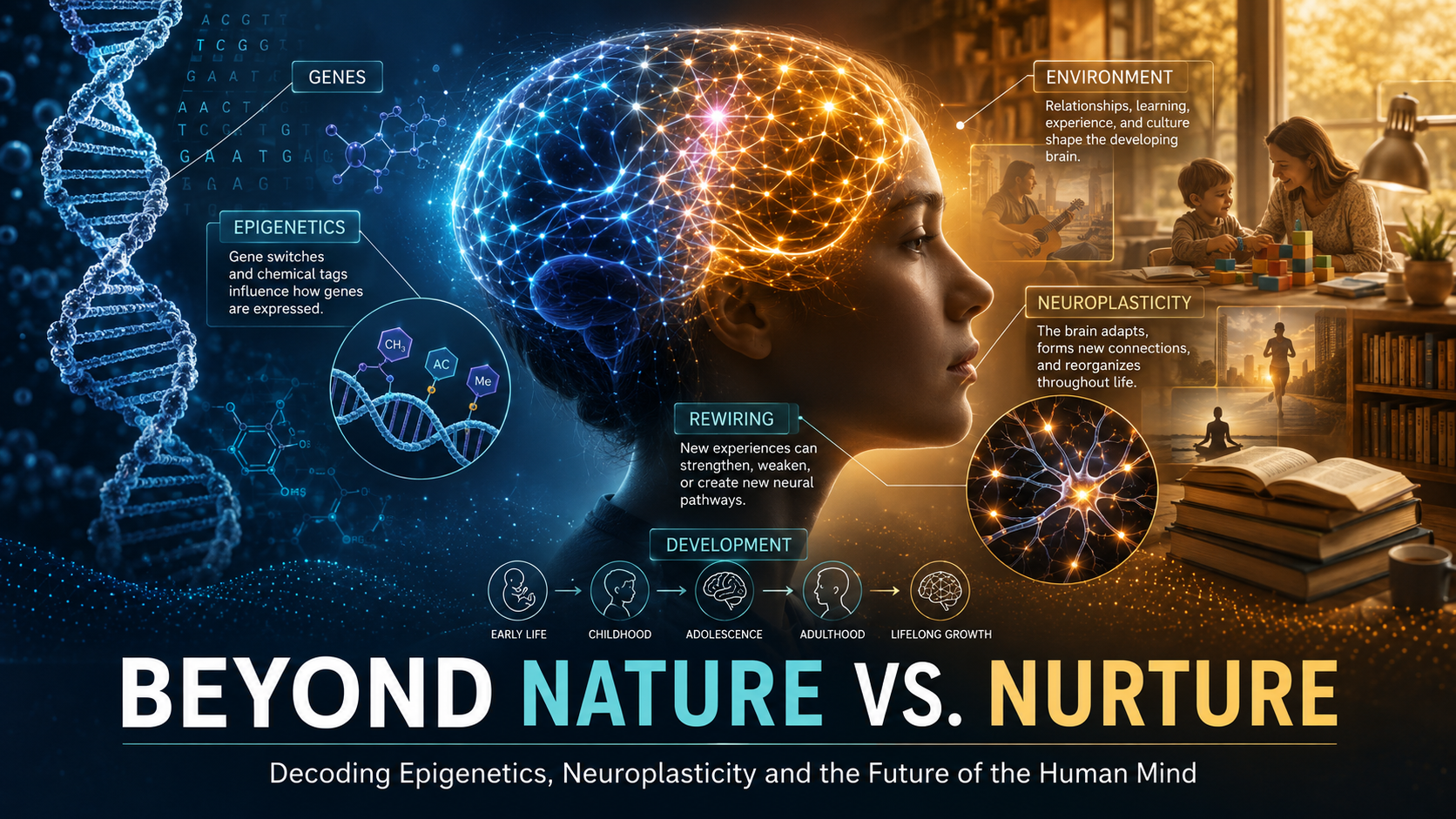
Two groundbreaking fields – epigenetics and neuroplasticity – have revealed that our biology is not a blueprint carved in stone; it is a dynamic, living conversation between our bodies and our environments. But while these terms are frequently thrown around in educational and wellness circles, what do they actually mean, how do they differ, and crucially, where should we start questioning them?
Epigenetics vs. Neuroplasticity: What’s the Difference?
While both fields explain how our environments change who we are, they operate at completely different levels of our biology.
An easy way to understand the difference is to think of your biology as a state-of-the-art computer system:
1. Epigenetics: The Software Settings
Your DNA sequence is the unchangeable hardware. Epigenetics is the software settings that dictate which programs actually run.
-
What it is: The study of how your behaviors and environment (stress, diet, sleep, trauma, or early learning) cause changes that affect the way your genes work.
-
How it works: It doesn’t alter your actual DNA code, but it attaches chemical “tags” to your DNA. Think of these tags as light switches. A high-stress environment might flip the switch “ON” for a gene associated with anxiety or inflammation, while a supportive, rich learning environment might flip that switch “OFF.”
2. Neuroplasticity: The Network Rewiring
If epigenetics alters the software instructions, neuroplasticity is the physical rewiring of the computer’s internal circuits based on usage.
-
What it is: The brain’s ability to structurally and functionally reorganize itself by forming new neural connections throughout your entire life.
-
How it works: Your brain is a dense forest of pathways. When you repeat an action, practice a skill (like reading aloud), or experience a traumatic event, the brain widens and reinforces that specific pathway. Conversely, pathways that aren’t used are quietly pruned away.
In Short: Epigenetics determines which genetic instructions your cells read. Neuroplasticity determines how your brain physically wires itself in response to those instructions and your daily actions.
How They Work Together in Development
Over the past 20 years, we have seen a massive spike in neurodivergent diagnoses like ADHD, dyslexia, and autism, alongside a radical transformation in the modern human environment (screen saturation, sensory overload, and shifting social structures).
Epigenetics and neuroplasticity explain exactly why this is happening. Everyone is born with a unique neurological spectrum. When a child is exposed to a specific environment, epigenetic switches are flipped. These genetic signals then instruct the brain to wire itself in a certain way (neuroplasticity).
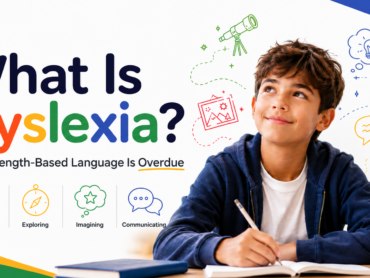
For example, a child with a genetic predisposition for dyslexia might see those traits heavily amplified in a highly rigid, fast-paced digital learning environment. However, if that same child is placed in an environment rich in early speech therapy and intensive aloud reading, neuroplasticity can carve alternative pathways for language processing, fundamentally changing how that dyslexia manifests in adulthood.
Let’s Question It: The Dark Side of Infinite Fluidity
Because epigenetics and neuroplasticity offer so much hope, they have become the darlings of the self-help, wellness, and educational technology industries. But it’s time to cast a critical, questioning eye over how these concepts are being used.
Question 1: Does “Infinite Plasticity” Slip Into Gaslighting?
If the brain is endlessly moldable and our genes are just switches controlled by the environment, there is a dangerous tendency to blame the individual or the parent when a child struggles. If a child doesn’t overcome ADHD or dyslexia, is it just because the parents didn’t provide the “perfect” environment, or because the child isn’t doing enough cognitive exercises?
-
The Reality Check: Neuroplasticity has limits. A brain with a neurodivergent baseline processes information differently by design. Pretending we can “wire away” lifelong neurological realities ignores the beauty—and the stubborn permanence – of true neurodiversity.
Question 2: Are We Ignoring Hardwired Baselines?
In our rush to praise environmental influence, we risk treating children like completely blank slates. If everyone is born on a spectrum, there is a hardwired biological baseline that must be respected. Trying to force a deeply autistic or highly ADHD brain into a neurotypical mold using “plasticity techniques” can cause immense psychological distress and burnout.
Question 3: How Can We Track a Moving Target Without Data?
If our biology is changing in response to our environment every single year, how can we possibly manage our health or education without tracking the journey? Right now, the medical and educational systems treat diagnoses as fixed labels, yet they destroy the childhood baseline records (like the UK’s age-25 data purge).
The EdiWay Perspective
If our brains are continuously adapting and our epigenetic switches are constantly flipping, your childhood data is the only anchor you have.
You cannot measure how much your brain has adapted, nor can you accurately seek a later-in-life diagnosis for ADHD or trauma-related conditions if the baseline map of your childhood mind has been shredded. At EdiWay, we believe that because human biology is fluid, preserving your historical data is the only way to truly own your future. We don’t just need a flexible approach to learning; we need a permanent way to track it.